


All versions
1.0.0
Bucketry Revamp 1.0.0last month 72
Compatibility
Minecraft: Java Edition
Platform
Supported environments
Changes

The bucket progression vanilla never finished.
Vanilla gives you exactly one bucket — iron, or nothing. Bucketry fills that one missing piece with a small, vanilla-first tier ladder: a cheap wooden bucket early, a tougher bamboo one, and a permanent copper one — plus a lightly revised iron recipe. No HUD, no menus, no new ores. Just buckets that behave the way you'd expect.
🪣 The tiers
| Tier | Material | Durability | Empty stacks | Powder snow |
|---|---|---|---|---|
| 🪣 Wooden | 3 planks + 3 sticks | ~16 uses | — | — |
| 🎋 Bamboo | 3 bamboo planks + 3 bamboo | ~32 uses (2× wood) | — | — |
| 🟠 Copper | 3 copper ingots + 3 copper chains | permanent | 16 | ✅ |
| ⚙️ Iron | vanilla — recipe revised | permanent | 16 | ✅ |
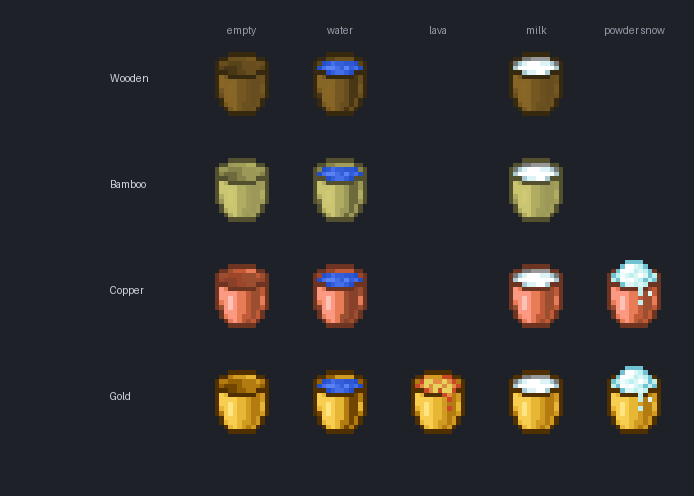
✨ What you can do
- Wooden & bamboo buckets wear out and break — and you can repair them by combining two damaged ones in the crafting grid, just like any tool.
- Copper is permanent like iron: it never breaks, the empty bucket stacks to 16, and it can scoop powder snow.
- Every tier has empty / water / milk variants — milk a cow, then drink to clear effects. Copper adds a powder snow bucket on top.
- The iron bucket is 100% vanilla; only its recipe changes to match the family's shape.
🛠️ Recipes
One shared shape: three sticks/chains across the top, the bucket body as a U below.
| Wooden | Bamboo |
|---|---|
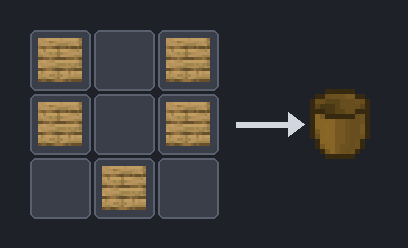 |
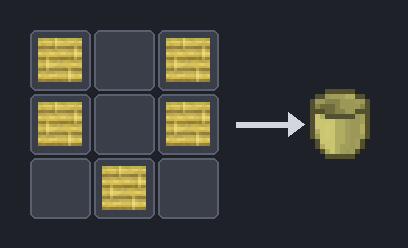 |
| Copper | Iron (revised) |
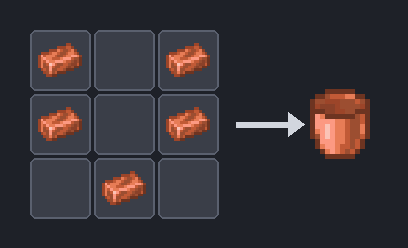 |
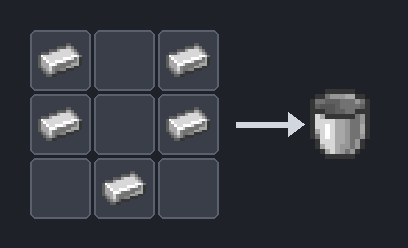 |
Water, milk and powder-snow buckets aren't crafted — fill an empty bucket, milk a cow, or scoop powder snow (copper only).
🌍 Good to know
- Loaders: NeoForge and Fabric (the Fabric build needs Fabric API).
- Minecraft: 26.1.2.
- Required on both client and server.
- 30 languages included.
- Open source under the MIT license — source & issues on GitHub.