


Included content
| Name | |
|---|---|
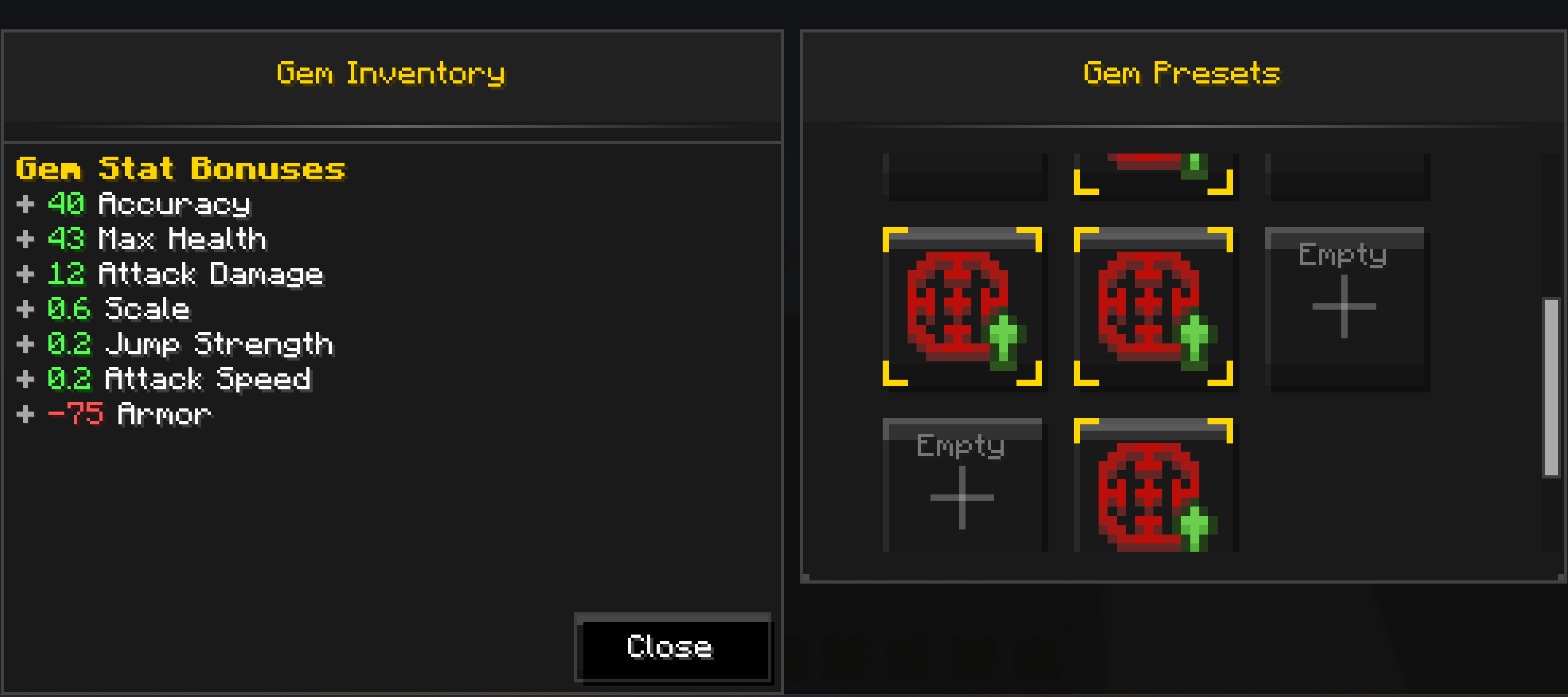 Default Gem Tab
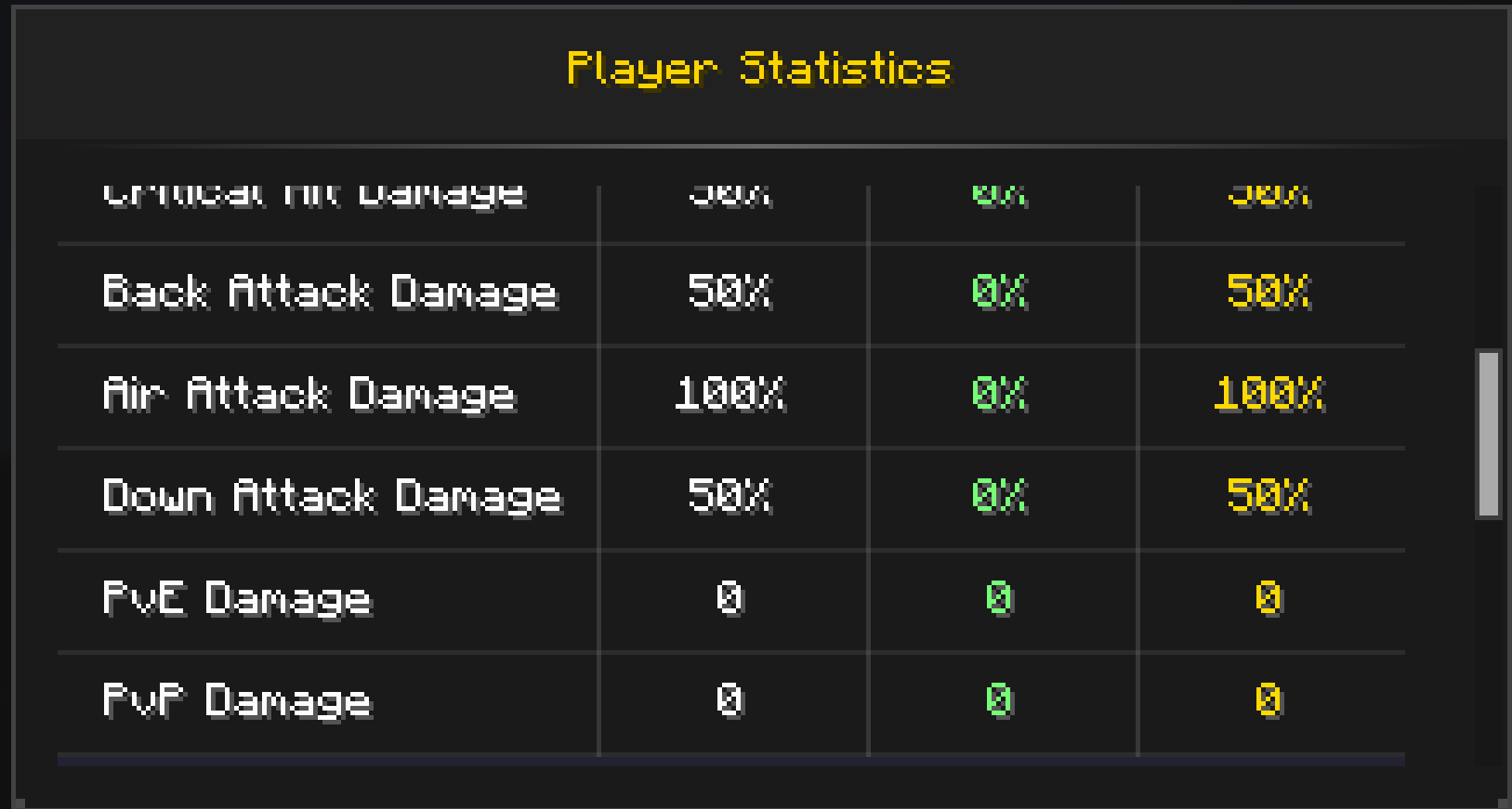
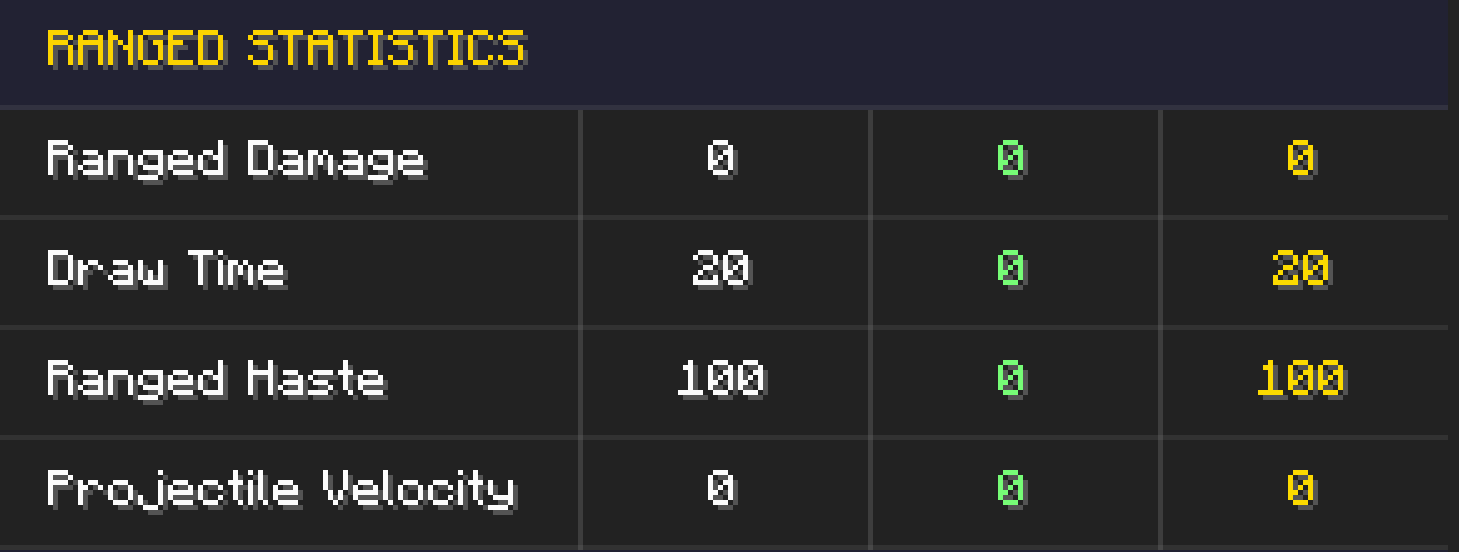
The main goal of this is bypass the 30 armor points vanilla limit which prevents users from having high armor values.
System Comparison:
| Feature | Vanilla Minecraft | Dominatus v2 (<0.9.6) | Dominatus v3 (Current 0.9.7) |
|---|---|---|---|
| Base Formula | Complex formula with diminishing returns | Bracket-based system | Simple: damage = damage - defense |
| Defense Calculation | armor - (damage / (2 + toughness/4)) |
DP brackets with linear interpolation | defense = armor + (armorToughness * 1.2) |
| Maximum Reduction | Can reach 100% | Hard cap at 30% | Hard cap at 90% |
| Armor Penetration | Modifies effectiveness value | Not directly addressed | Directly reduces final damage reduction % |
| High Armor | Diminishing returns after 20 armor | Bracket system caps benefits | Linear scaling with 90% maximum |
| Armor Toughness | Reduces impact of high damage | Small bonus (2-3% at 12 DR) | Direct 1.2× multiplier to defense |
| Name | |
|---|---|