

Links
Tags
Creators
Details
Licensed CC-BY-NC-4.0
Published 2 months ago
Updated 3 days ago
All versions
2.1.0+26.1-fabric
One Dimension 2.1.0 — Fabric 26.13 days ago 2
Uploaded by
Compatibility
Minecraft: Java Edition
Platform
Supported environments
Required content

Changes
OneDimension 2.1.0
A compatibility release — the most-reported mod conflicts, fixed.
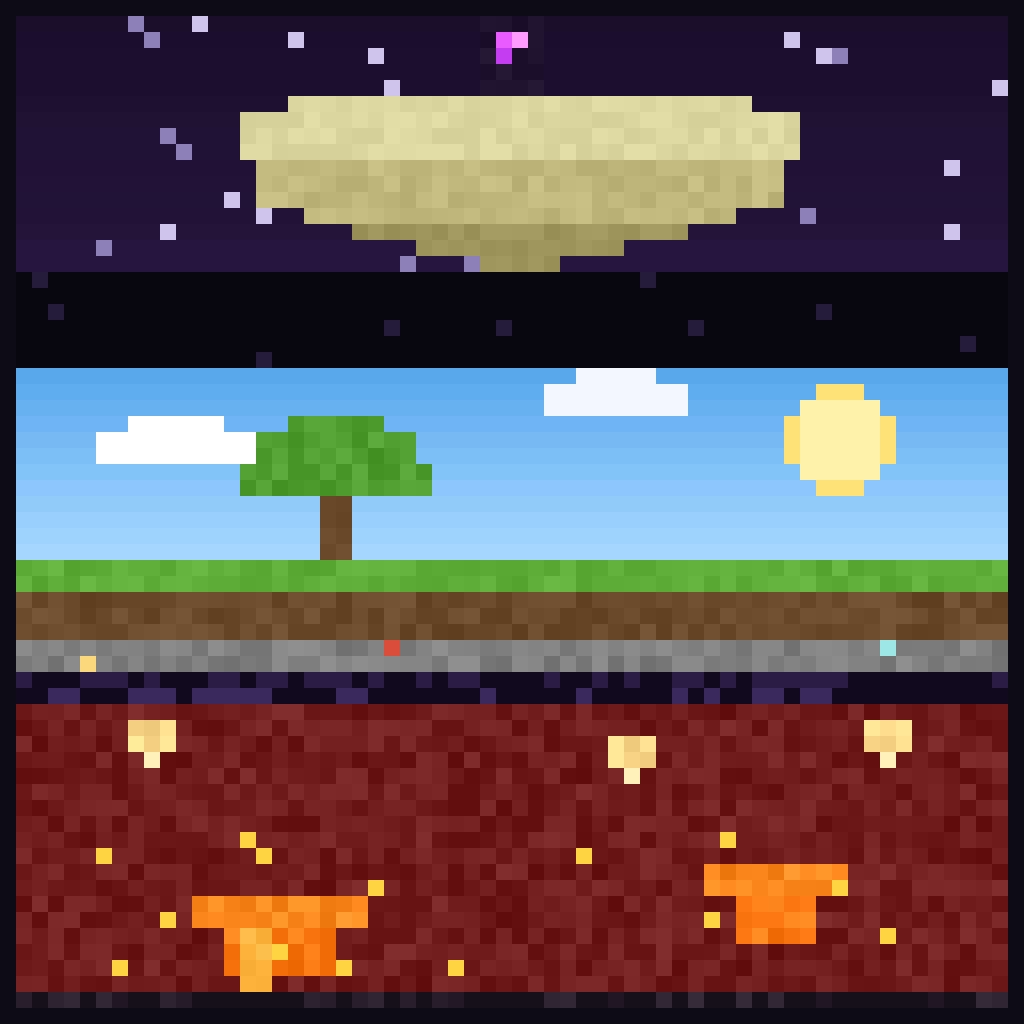
- Amplified Nether (and other tall-Nether packs) now fit. The dimension floor moved down to y −320, so a Nether up to 256 blocks tall generates in full instead of being cut through the middle by the obsidian floor. Tested with Amplified Nether and Incendium. Existing worlds upgrade automatically the first time they load.
- End gateways work. Stepping into a gateway after the dragon fight now takes you to the outer End islands.
- Xaero's World Map & Minimap: each band maps as its own layer — the End no longer draws over your Overworld map, and standing in the End maps the End, instead of the Overworld showing through the gaps between the islands.
- Distant Horizons: the End's islands no longer hang over the Overworld in the distance, and no longer leave dark island-shaped patches on the ground beneath them. (Distant terrain Distant Horizons has already saved keeps its old lighting until it regenerates.)
- Iris / Oculus shaders now use their Nether and End environments inside those bands, rather than rendering the whole world as Overworld.
- Fixed a crash on world load with Biolith installed — this affects Biolith-based biome mods.
- Fixed unnatural free-floating End stone slabs at chunk borders out in the End's void (newly generated chunks only).
Requires CodxLib 1.3.6 or newer.