

Tags
Creators
Details
0.4.0.alpha
Compatibility
Changes
We finally implement fluid handling.
[Added]
-
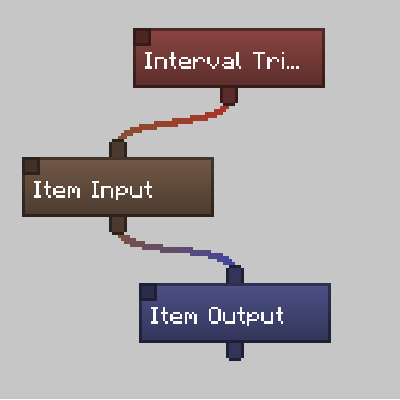
Fluid Input and Fluid Output Nodes: Flowchart nodes designed to extract, deposit, and route liquids across network cables.
-
Vanilla Cauldron Support: Water, lava, and empty cauldrons are now recognized as valid fluid network terminals, allowing players to fill or drain them automatically.
-
Special Block Capability Registry: A developer API allowing third-party add-ons to bridge standard blocks that do not natively implement NeoForge capabilities to the physical cable network.
-
Ench and Damage settings overlays: Sub-panels inside the advanced item filter cards now feature custom configurations.
-
New unified execution logging channel to cleanly monitor flowchart triggers, item routing, and settings warnings in debug logs.
[Changed]
-
Topological Capability Registry: Hardcoded network checks have been migrated to a registry-based pattern, laying the groundwork for energy and chemical integration.
-
Submenu Layouts: Category hover menus are now wider, centering their columns and incorporating better vertical spacing.
-
Planning Safety: Asynchronous flowchart planning now runs against immutable thread-safe snapshots of scanned block configurations to prevent state desyncs.
-
Refactored core internal logic to completely separate flowchart data models from their pathfinding planners, making the codebase more modular.
-
Moved copy, delete, and movement canvas actions out of the main block controller into a dedicated canvas actions handler.
[Fixed]
- Symmetrical Grid Centering: Custom slot configuration popups now align and center their grids relative to the number of available slots.
[Removed]
- Hardcoded Capability Enums: Eliminated the legacy ConnectionBlockType enum to prevent system constraints on future capability additions.