


Tags
Creators
Details
Licensed ARR
Published 3 years ago
Updated last month
All versions
18.0.mod
Vanilla+ | Version 18.0 (Mod)last year 2,459
Compatibility
Minecraft: Java Edition
Platforms
Supported environments
Changes
Iron Hammer, Tweaked textures, 3D Food, and Mexican Spanish support!
This update is small in terms of new features, but I've also manually translated every item in the data pack into Mexican Spanish! Read more below.
- Iron Hammer: this is crafted with 5 iron blocks and 2 sticks. It's meant to be reminiscent of an early game Mace, but its real advantage is that it can be used as both a tool and a weapon. It has the capabilities of an Iron Pickaxe with double the durability, but its only supported enchantments are for the Pickaxe aspect of it. However, it has an attack speed between Swords and Axes, and deals some base knockback!
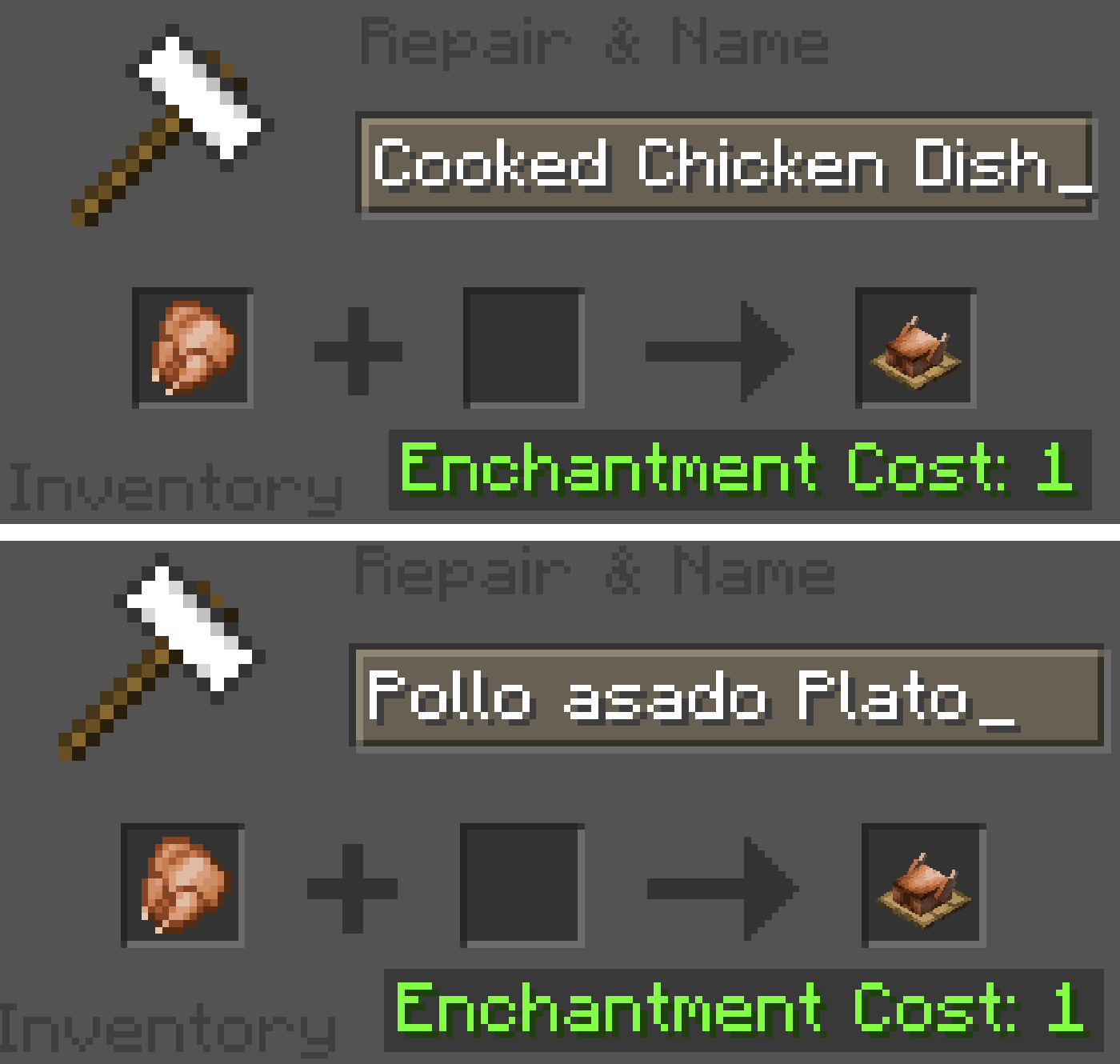
- 3D Food: I'm in the process of making 3D models for every food item in the game! These are accessed by renaming the food in an anvil and adding "Dish" (or in Spanish, "Plato") after the name! You can place them in item frames so that the frame is completely covered. This is inspired by resource packs that feature 3D food! See the image below on how to do it.
- Texture Changes: With the announcement of Copper Armor and Tools coming to the base game, I've changed the item textures to match the Vanilla textures. I've also changed the model textures for Copper and Emerald Armor. Side note, the Copper Gear in this pack WILL BE REMOVED once it is added to the Vanilla game.
- Spanish Translations: In real life, I'm studying Spanish, so I decided to manually translate every item and advancement in my data pack to Mexican Spanish! Now, when you turn on "Español (MS)" in Minecraft, any item crafted after this update will now be translated into Spanish!