
Compatibility
Minecraft: Java Edition
Platforms


Links
Tags
Creators
Details
MineCommunication
MineCommunication is a revolutionary Minecraft server plugin that brings a complete communication ecosystem to your server. From primitive voice chat to futuristic quantum communication, players can experience the full evolution of communication technology in the game world.
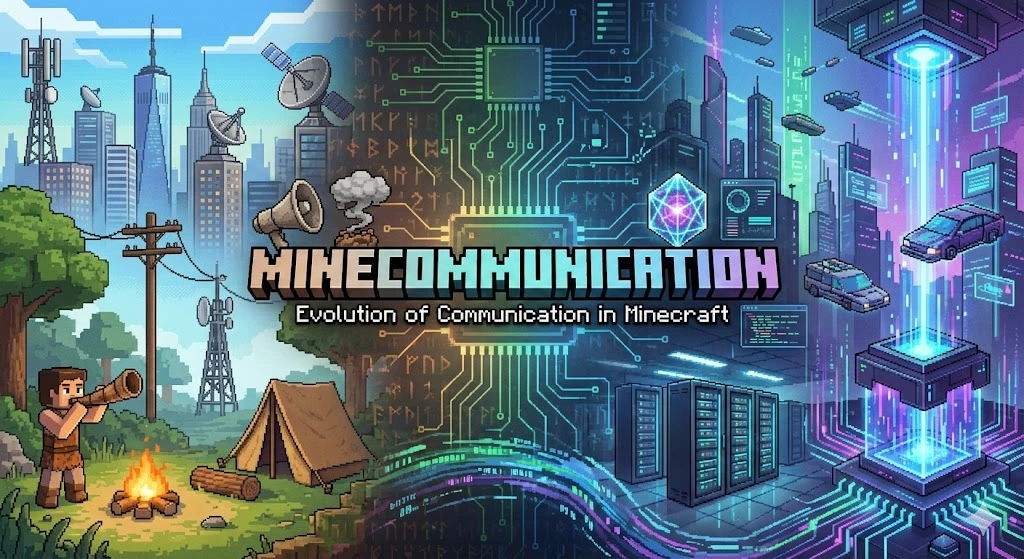
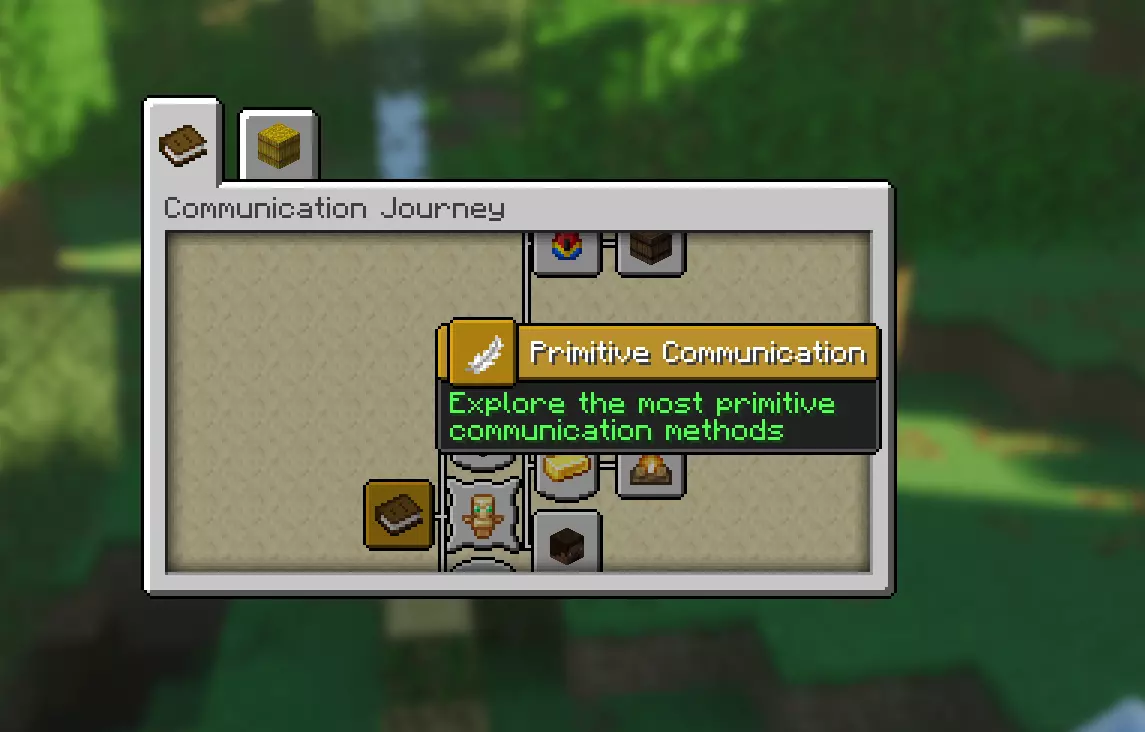
The plugin simulates real-world physics, network architecture, and security mechanisms, providing your server community with unprecedented immersion and strategic depth. In addition, we've introduced a complete crafting mechanism and advancement system, along with a comprehensive in-game manual to help players understand the gameplay.
Note: This plugin requires Paper 1.21+ servers. Spigot servers are not supported.
Communication Systems Overview
MineCommunication contains 12 different communication systems, divided into four technological eras:
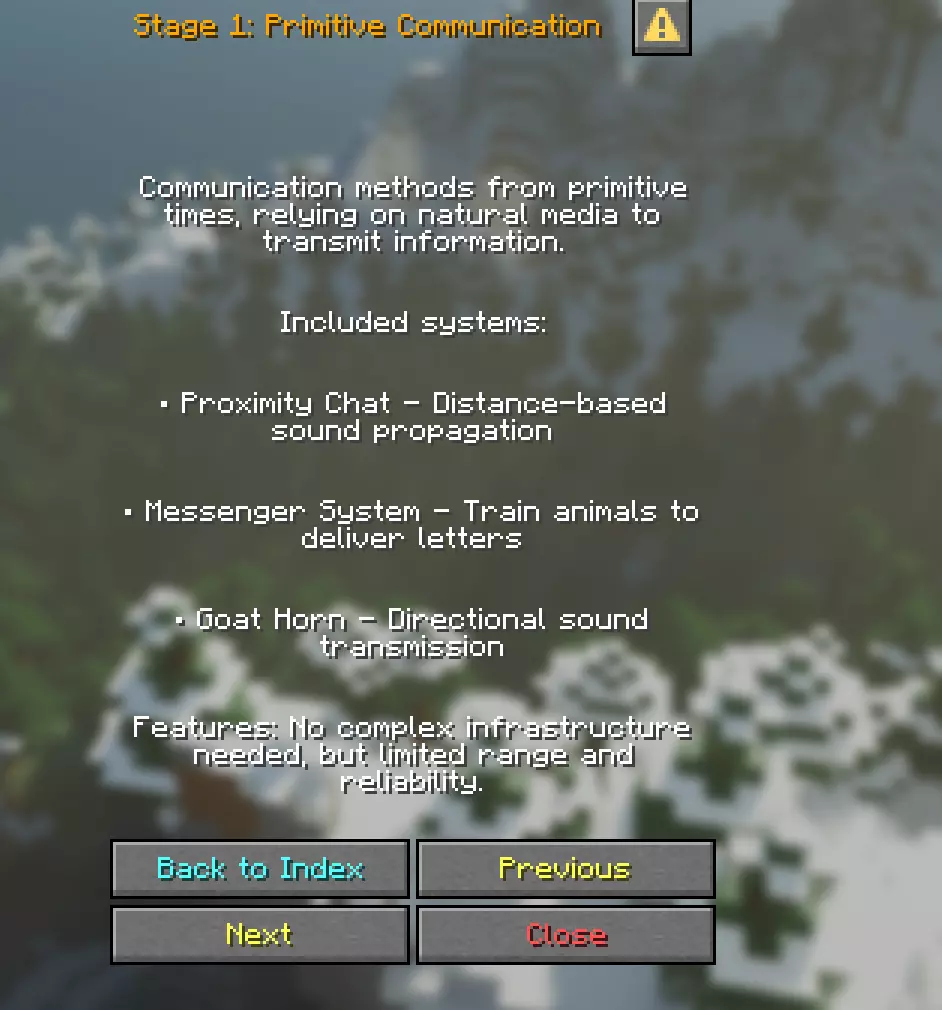
- Primitive Era: Proximity Chat, Post Office, Goat Horn
- Ancient Era: Beacon, Telegraph, Telephone
- Modern Era: Radio, Broadcast Station, Fiber Optic
- Future Era: Base Station Network, Satellite, Quantum Entanglement
Stage 1: Primitive Communication Systems
1. Proximity Chat System
The most basic communication method. Player chat messages are filtered and distorted based on physical distance, simulating real sound wave propagation.
Core Mechanics:
- Distance Limit: Messages can only be received by players within a configurable range (default: 50 blocks)
- Signal Attenuation: Message content gradually distorts as distance increases
- Transmission Delay: Messages propagate at a configurable speed of sound (default: 343 m/s)
- Line of Sight: Sound cannot penetrate solid blocks
Environmental Factors:
- Underwater: 1.5x attenuation multiplier
- Cave Environment: 1.2x attenuation multiplier
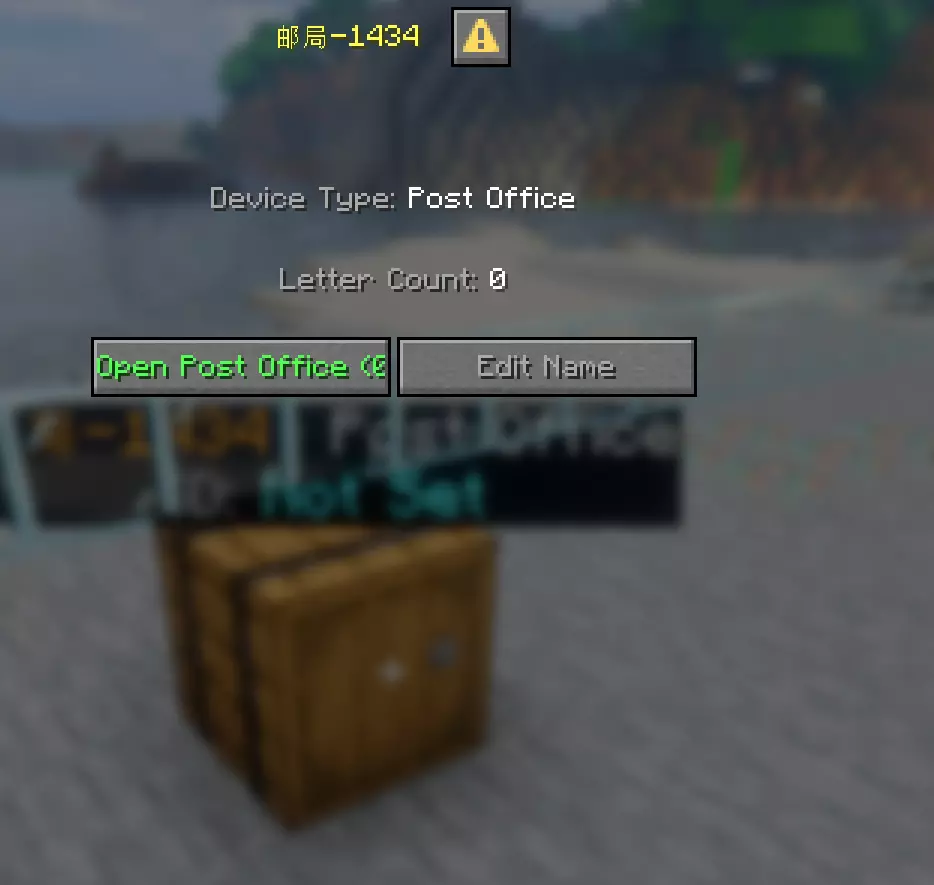
2. Post Office System
Players can train animals (parrots, horses, etc.) as messengers to deliver books between post offices, creating a medieval postal network experience.
Core Mechanics:
- Animal Training: Messengers can be trained to increase their level, enhancing:
- Movement speed
- Maximum delivery distance
- Cargo capacity
- Reduced chance of getting lost
- Post Office Network: Players establish post offices as information hubs
- Book Delivery: Messages are delivered as books, stored in barrel containers
- Wait Mechanism: If the destination barrel is full, the messenger will wait
- Timeout Return: After 5 minutes of waiting, the messenger automatically returns
Risk Factors: Messengers may get lost, die, or be intercepted
3. Goat Horn Directional Transmission
Players use a goat horn to send directional sound messages within a cone-shaped area. Only players within the transmission area can receive the message.
Core Mechanics:
- Fan-shaped Propagation: Sound propagates in a configurable cone range (default: 60° angle)
- Directional Requirement: Players must face the target direction
- Distance Limit: Maximum range of 100 blocks (configurable)
- Line of Sight: Sound waves cannot penetrate solid blocks
Stage 2: Ancient Communication Systems
4. Beacon System
Players can build beacons to transmit visual signals over long distances. Signal towers must have line-of-sight connection and are affected by weather conditions. When a signal is sent, the beacon will relay the fire signal to other beacons within visible range, which can continue to propagate.
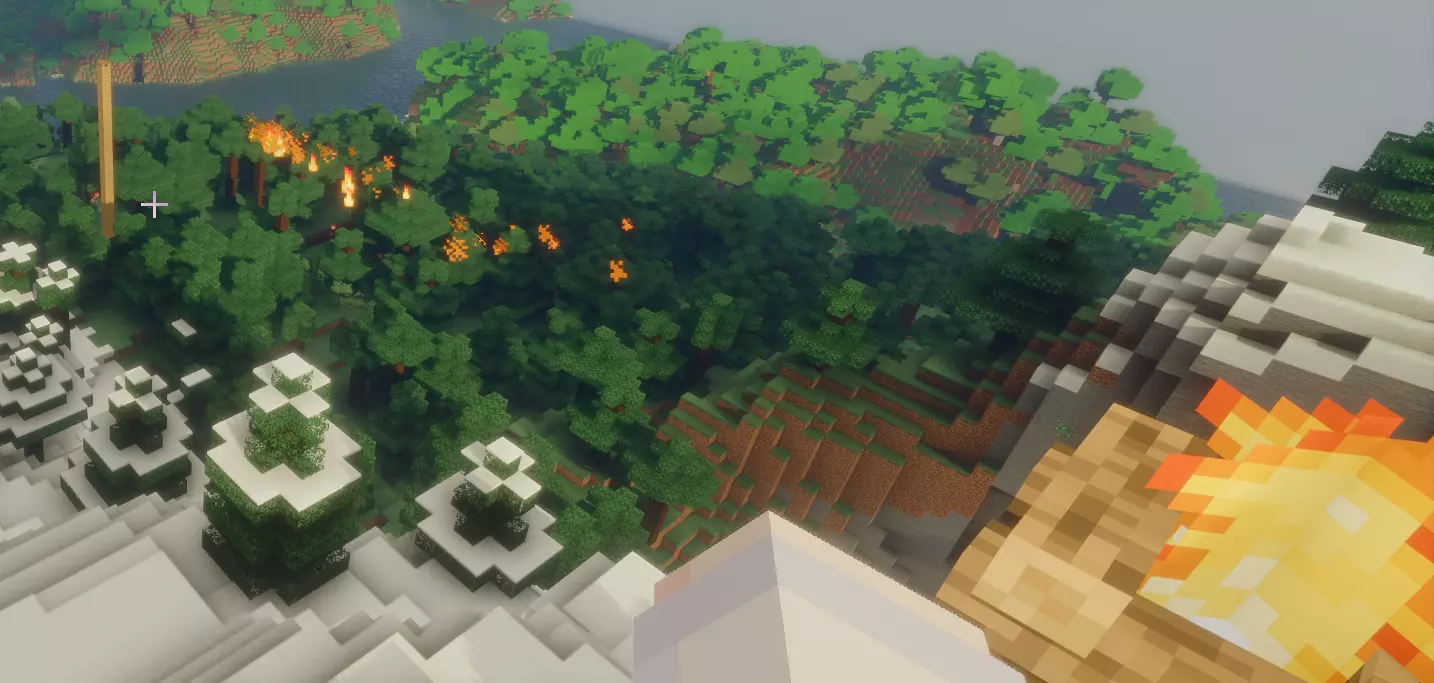
Core Mechanics:
- Line-of-Sight Detection: Signal towers must be mutually visible to relay signals
- Height Requirement: Minimum height of 10 blocks for effective transmission
- Fuel System: Requires fuel (coal) to maintain fire for receiving and sending beacon signals
- Relay Network: Multiple signal towers form a chain network to extend transmission range
- Weather Impact: Thunderstorms reduce visibility and signal transmission speed by 70%
5. Telegraph System
Players can lay copper cables (copper chains or iron chains) to connect multiple telegraph stations for broadcast-style message transmission. The game features realistic signal attenuation, message collision, and modulation mechanisms.
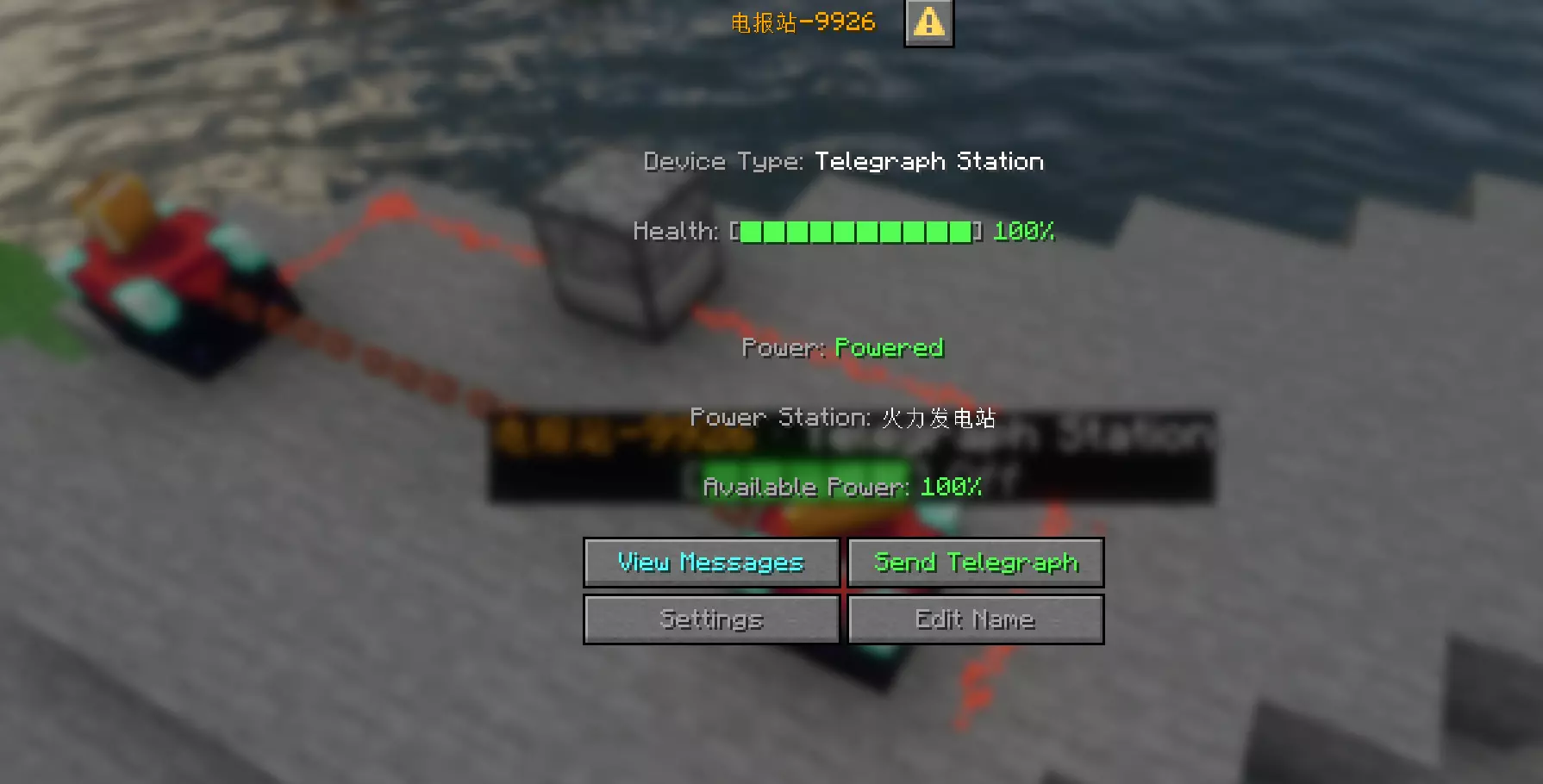
Core Mechanics:
- Cable Network: Copper cables connect telegraph stations
- Signal Attenuation: 1% signal loss per cable block (configurable)
- Broadcast Mode: All stations on the network receive all messages
- Message Collision: Signal collisions may occur when multiple messages are transmitted simultaneously on the telegraph network
- Cable Aging: Copper cables corrode over time, affecting signal quality
6. Telephone System
Players can set up telephone devices and telephone exchanges, connected by copper cables, and transmit messages through a dial system. Telephone devices and exchanges require power. In the telephone system network, the exchange handles phone messages for its assigned phone number prefix, and messages with the same prefix must pass through the designated exchange on the same network.
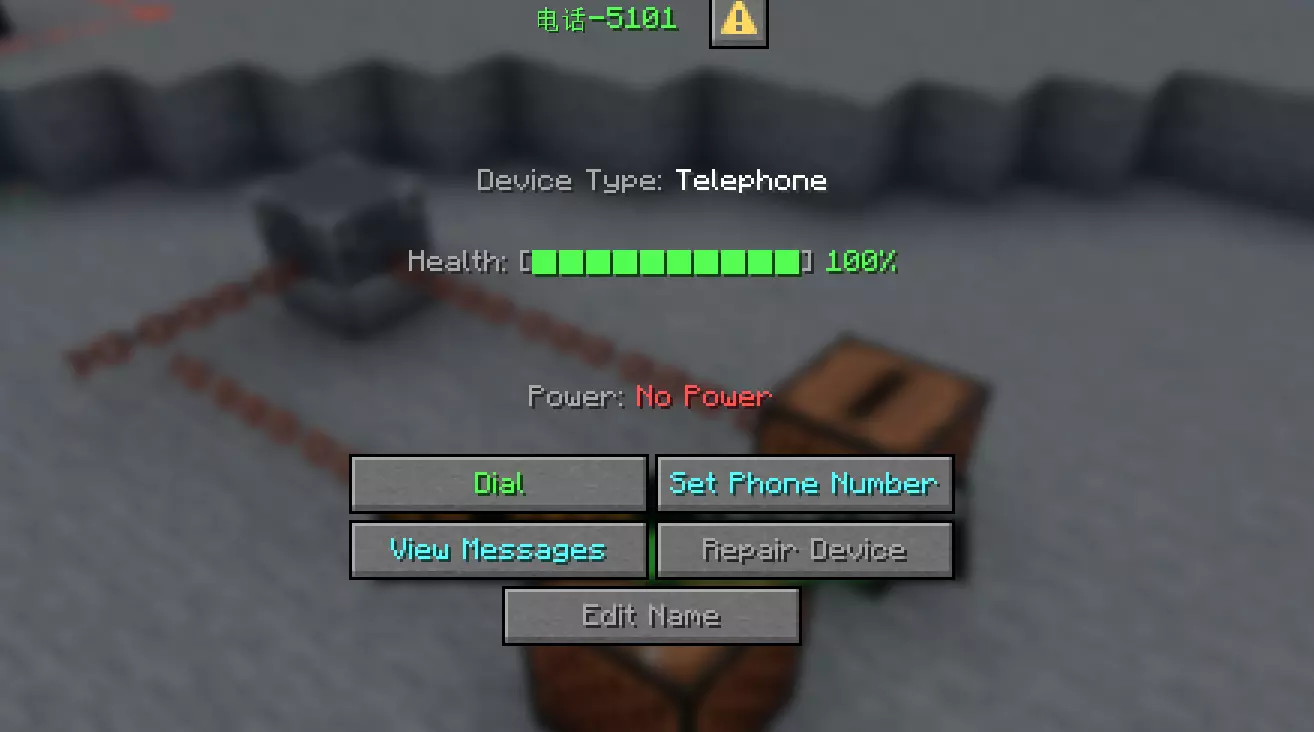
Core Mechanics:
- Unique Phone Numbers: Each device in the same telephone network has a unique phone number
- Exchange Routing: The telephone exchange manages all call requests for its configured phone number prefix (at least 3 digits). Exchanges can also connect to subordinate exchanges with longer prefixes for delegation topology
- Power Requirement: Devices require power to operate
- Bidirectional Communication: The telephone network supports bidirectional message transmission
Routing Path: Telephone Device → Telephone Exchange → Wired Network (Copper Chain) → Secondary Telephone Exchange (optional) → Telephone Device
Stage 3: Modern Communication Systems
7. Radio System
Players use radio devices for multi-channel wireless communication. Supports multiple frequency bands with different propagation characteristics.
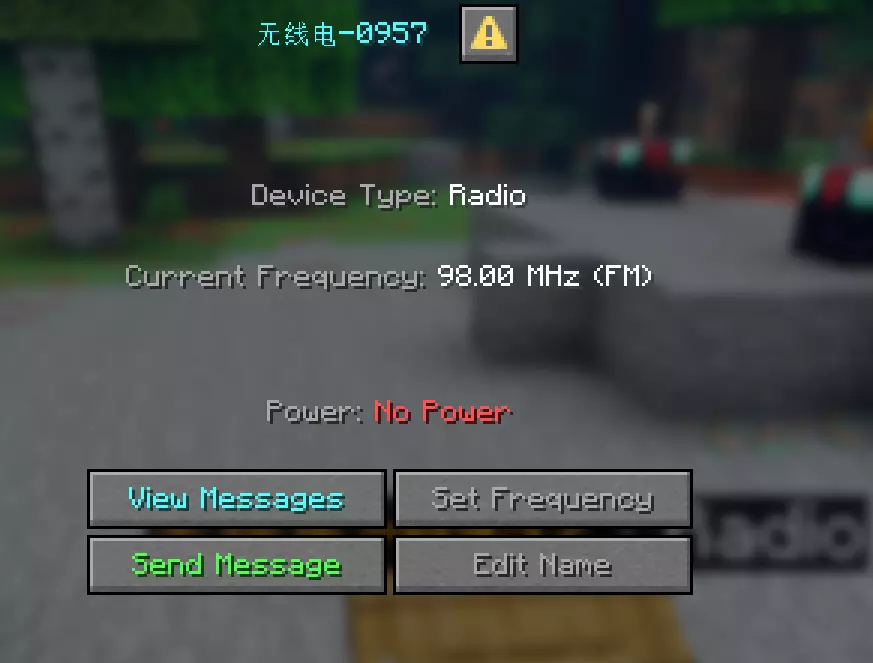
Frequency Bands:
| Band Name | Frequency | Max Propagation Distance |
|---|---|---|
| Long Wave (LW) | 0.03-0.3 MHz | 500 meters |
| Medium Wave (MW) | 0.3-3.0 MHz | 200 meters |
| Short Wave (SW) | 3.0-30.0 MHz | 1000 meters |
| FM | 88.0-108.0 MHz | 100 meters |
Long wave is a special case among all bands. While other bands transmit signals in straight lines, long wave propagates signals through the sky (ionosphere), effectively avoiding obstacles.
Core Mechanics:
- Frequency Management: Each channel uses a specific frequency
- Terrain Blocking: Mountains and buildings reduce effective transmission distance
- Frequency Conflict: Adjacent frequencies cause interference (up to 50% additional attenuation)
- Signal Attenuation: Depends on distance, terrain, and interference
8. Broadcast Station System
Players can build broadcast stations for omnidirectional area broadcasting. All players within the coverage range receive messages directly in their chat window—no receiving equipment needed.
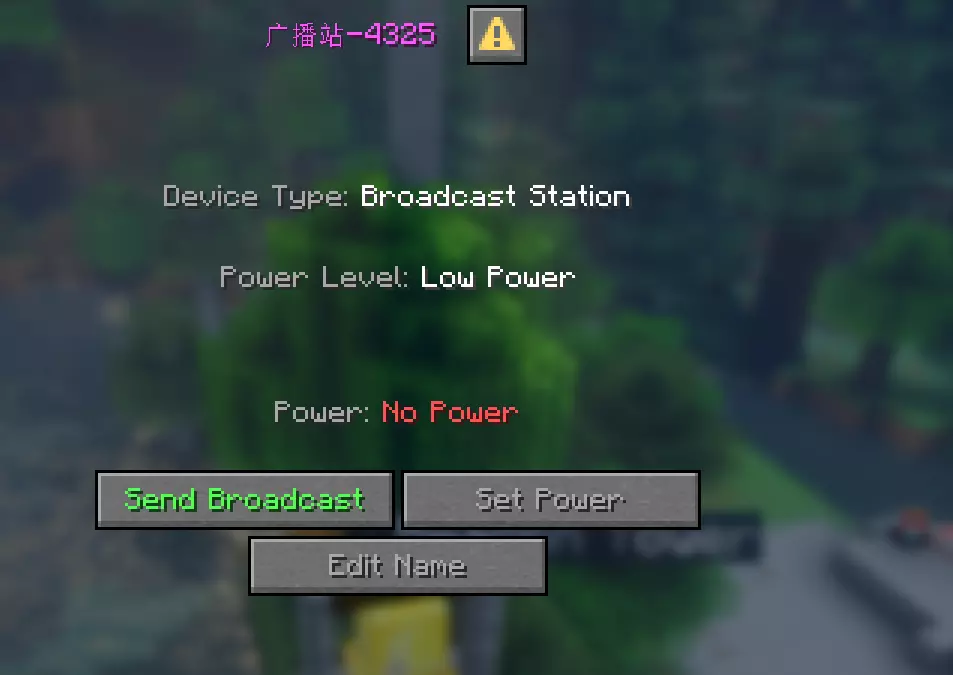
Core Mechanics:
- One-way Broadcast: Stations can only send broadcasts, not receive
- No Receiver Needed: Players within range automatically receive broadcasts
- Height Bonus: The higher the station location, the larger the coverage range
Weather Impact:
- Clear: 100% coverage
- Rain: 80% coverage
- Thunder: 60% coverage
Stage 4: Future Communication Systems
10. Base Station Network System
Players can build cellular base stations for mobile communication supporting multiple protocols (GSM, LTE, 5G). Requires fiber optic backhaul links and supports roaming carrier management.
Note: In the base station network system, players need to craft a "mobile phone" to send and receive messages, not through the base station module itself.
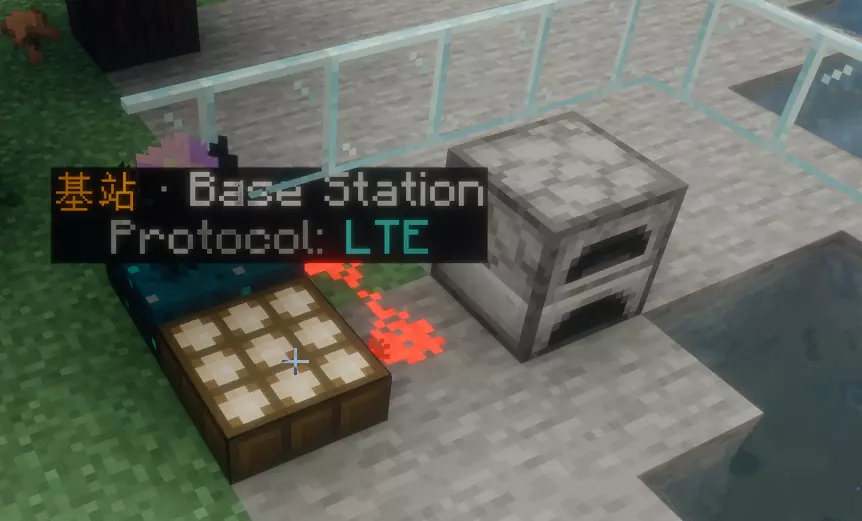
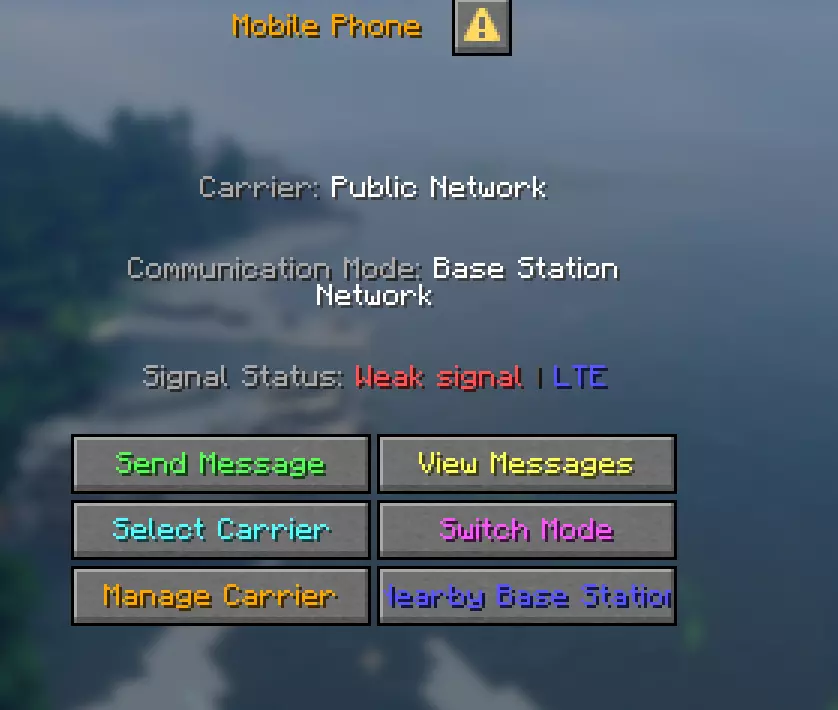
Protocol Specifications:
| Protocol | Coverage Distance | Propagation Speed (ticks) |
|---|---|---|
| GSM | 100 meters | 40 ticks |
| LTE | 50 meters | 20 ticks |
| 5G | 25 meters | 5 ticks |
Base Station Protocol Compatibility:
- Same Protocol: Fully compatible, can transmit signals to each other
- GSM to LTE: One-way compatible (LTE can receive GSM signals)
- 5G: Can only receive signals from 5G base stations
Core Mechanics:
- Fiber Backhaul Link: Base stations must be adjacent to fiber switches
- Carrier System: Players can create carriers, assign base stations, manage subscriptions
- Roaming Agreements: Carriers can establish roaming partnerships to share base station infrastructure
- Mobile Phone Functions: Send/receive messages, select carrier, switch communication mode
11. Satellite Communication System
Players launch satellites for global communication. Supports different orbit types and allows real-time observation of satellite movement in the sky.
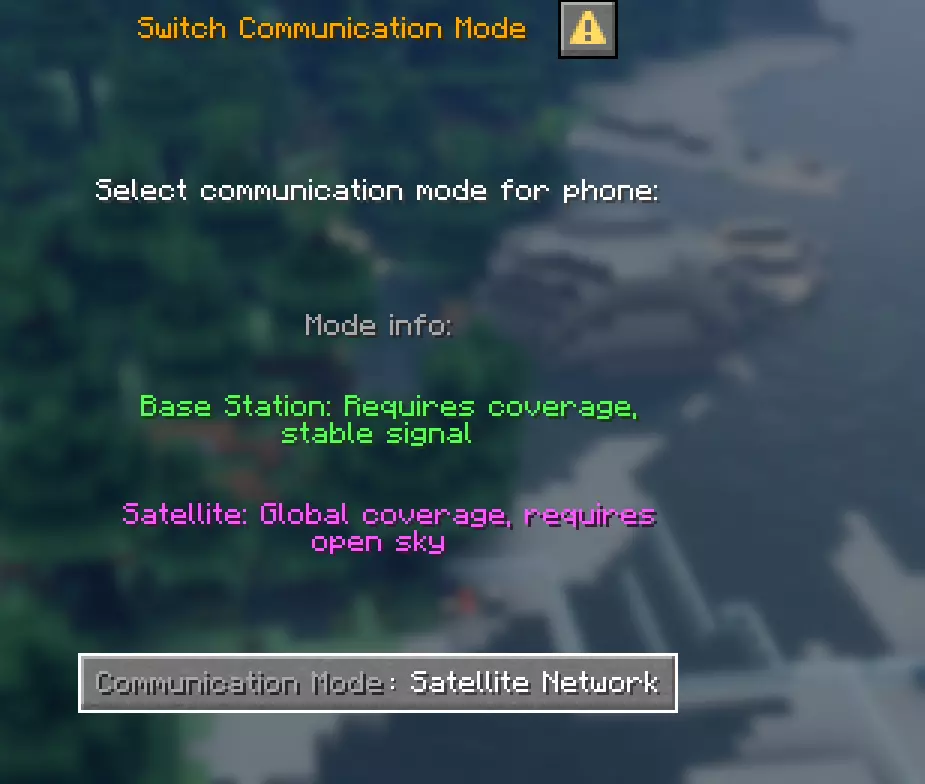
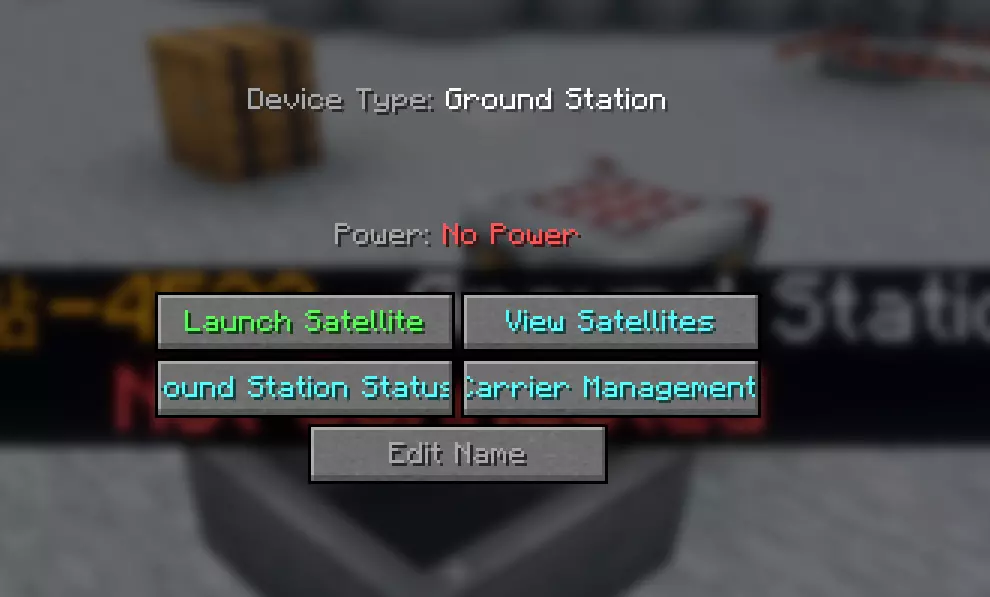

Orbit Types:
| Orbit | Altitude | Service Radius | Fuel Consumption | Orbit Characteristics |
|---|---|---|---|---|
| Low Earth Orbit (LEO) | 200 blocks | 500 blocks | 0.001/tick | Orbits ground station |
| Medium Earth Orbit (MEO) | 500 blocks | 800 blocks | 0.0005/tick | Orbits ground station |
| Geostationary Orbit (GEO) | 1000 blocks | 1200 blocks | 0.0002/tick | Stationary above ground station |
Core Mechanics:
- Satellite Launch: Requires ground station power
- Dynamic Orbit Center: Each satellite orbits its launch ground station
- Fuel Management: Warning at 20%, danger warning at 5%, collision at 0%
- Ground Station Requirement: Must be adjacent to fiber switch to transmit data through ground station
- Inter-Satellite Relay: In addition to ground station data transmission, satellites can directly exchange information with each other via inter-satellite relay
Solar Activity Impact:
- Low Earth Orbit (LEO): Up to 50% communication quality reduction
- Medium Earth Orbit (MEO): Up to 30% communication quality reduction
- Geostationary Orbit (GEO): Up to 20% communication quality reduction
- Solar Storm (activity above 90%): 50% delay increase
12. Quantum Communication System
The ultimate communication solution. Players build quantum nodes and establish quantum entanglement for instantaneous, absolutely secure communication. This is the only system capable of cross-dimension communication (Overworld/Nether/End).
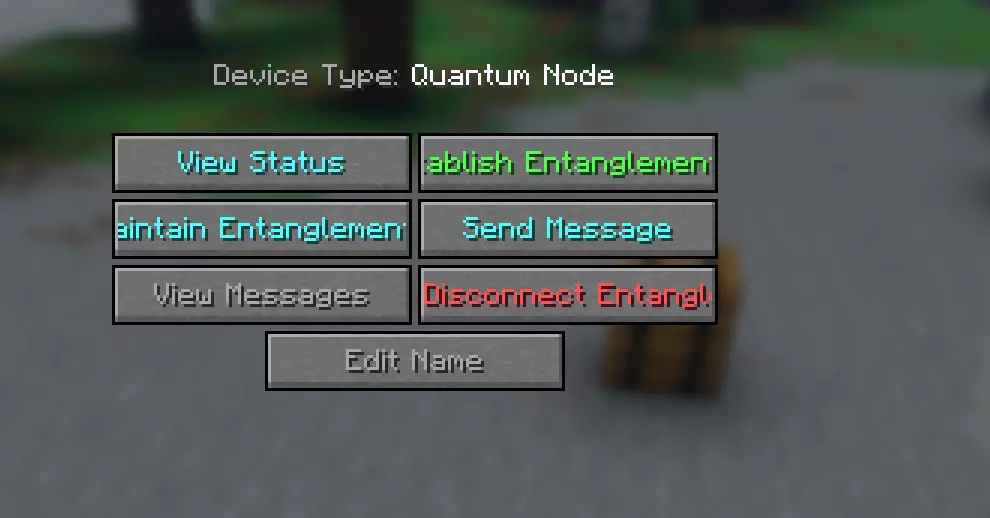
Core Mechanics:
- Cross-World Communication: Can communicate between Overworld, Nether, and End
- Instant Transmission: Direct entanglement achieves zero latency
Quantum Entanglement Health System:
| Transmission Type | Health Loss |
|---|---|
| Same World | 0.001/tick |
| Cross-World | 0.0015/tick |
Warning when health drops below 20%. Automatic disconnection when health drops below 0%.
Maintenance Mechanism:
- Materials: 1 Ender Pearl + 1 Diamond
- Each maintenance restores 25% health
- Cooldown: 5 minutes
Power System
Modern communication systems require power to operate. MineCommunication currently provides four power generation mechanisms: thermal, hydro, geothermal, and solar.
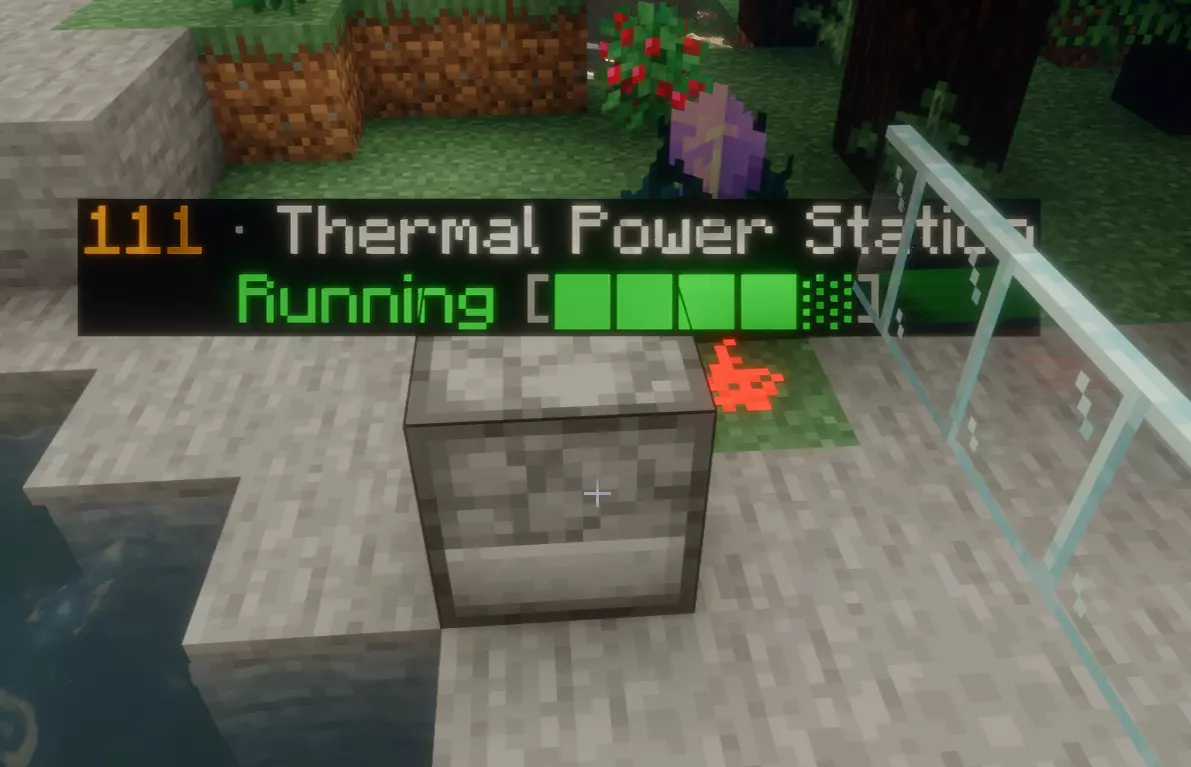
Power Station Types:
| Type | Generation Rate | Description |
|---|---|---|
| Thermal Power Station | 10.0/tick | Uses coal/charcoal fuel for power |
| Hydro Power Station | 6.0/tick | Generates power from water source height difference |
| Geothermal Power Station | 6.0/tick | Generates power from lava |
| Solar Power Station | 3.0/tick | Automatically generates power during daytime, only works in desert biomes |
Power stations can be connected to devices via redstone wiring.
Configuration & Customization
- Highly configurable, all parameters/crafting recipes can be configured via
config.yml - Supports hot-reload
- Each system can be individually enabled/disabled
Commands
Player Commands
| Command | Description |
|---|---|
/minecomm guide |
Open the system guide |
/minecomm menu |
Open the main menu |
Admin Commands
| Command | Description |
|---|---|
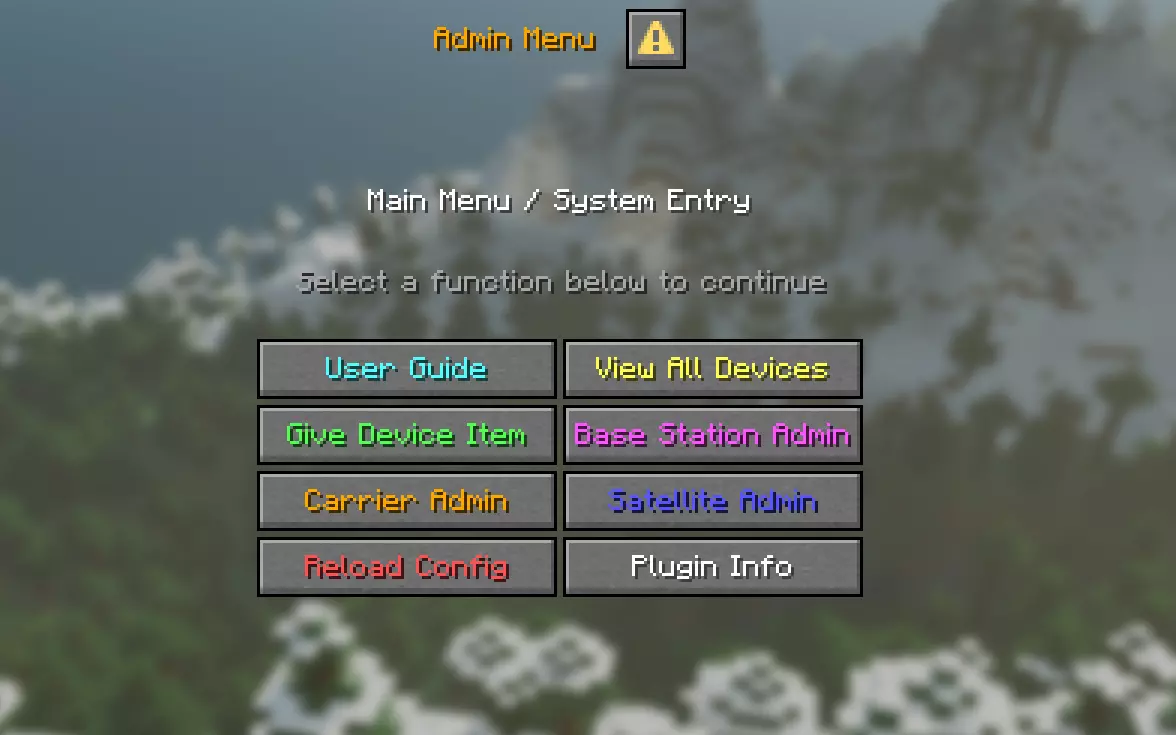
/minecomm give |
Give a player plugin items |
/minecomm reload |
Reload configuration |
Frequently Asked Questions (FAQ)
General Questions
Q: Will this plugin affect vanilla chat?
A: When proximity chat is enabled, it replaces the vanilla chat functionality. Players must be within effective range to communicate. You can disable this system to restore vanilla chat.
Q: Can players use multiple communication systems simultaneously?
A: Yes! Players can have devices from multiple systems and choose which system to use as needed.
Q: What happens when a device block is destroyed?
A: The system automatically cleans up all related data, including network connections, entanglement, and cached information. No items will drop.
Technical Questions
Q: What database does the plugin use?
A: It uses an H2 database by default, which is included within the plugin. No external database setup is required.
Gameplay Questions
Q: How do I refuel satellites?
A: Currently, satellites cannot be refueled after launch. Please carefully plan your satellite network and monitor fuel levels. When fuel is exhausted, the satellite will crash and must be relaunched.